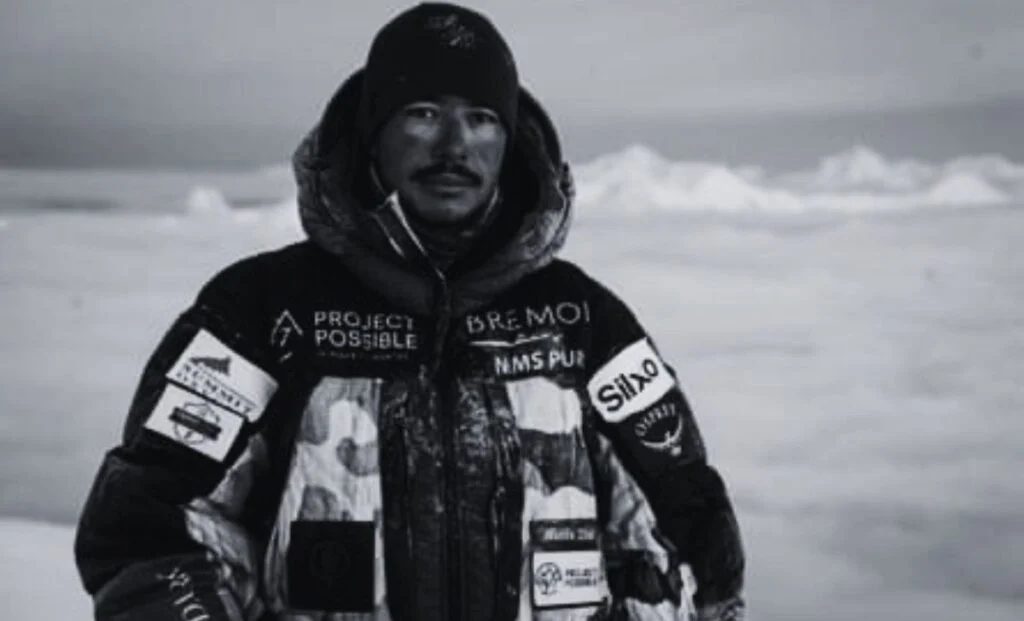
For years, Nirmal “Nims” Purja stood as one of Nepal’s most celebrated mountaineers, earning global recognition for redefining what many believed was physically possible in the Himalayas.
His rapid ascent to international fame, culminating in the record-breaking completion of all 14 of the world’s 8,000-metre peaks in just over six months, transformed him into a national icon, a bestselling author and the face of modern high-altitude climbing.
Yet long before his disappearance on Broad Peak captured worldwide attention, Purja’s legacy had become one of the most divisive in mountaineering.
To supporters, he is a pioneer who changed the global perception of Nepali climbers, proving they could lead the world’s most ambitious expeditions rather than remain behind the scenes as guides for foreign teams.
To critics, his career became increasingly overshadowed by serious allegations of sexual misconduct, questions about leadership and expedition culture, and a broader debate over the commercialization of extreme mountaineering.
A national hero who changed the sport
Purja’s achievements are difficult to overstate.
A former member of the British Army’s Gurkhas and the UK Special Boat Service, he entered professional mountaineering later than many elite climbers but quickly established himself among the world’s strongest high-altitude athletes.
In 2019, he launched “Project Possible,” climbing all 14 mountains above 8,000 metres in six months and six days. The previous record had stood for more than seven years.
His feat became the subject of the Netflix documentary 14 Peaks: Nothing Is Impossible, bringing Himalayan climbing to a global audience and making Purja one of the most recognisable figures in the sport.
Many Nepalis viewed his success as a landmark moment, arguing that it finally gave Sherpa and Nepali climbers the international recognition they had long deserved.
The rise of criticism
As Purja’s public profile grew, so did criticism from parts of the mountaineering community.
Some experienced climbers questioned whether the growing focus on speed records and highly commercial expeditions risked encouraging increasingly ambitious objectives on the world’s highest mountains.
Others argued that social media had begun rewarding records and headlines over the traditional values of patience, self-reliance and measured decision-making that have long defined Himalayan climbing.
Purja’s supporters rejected those criticisms, arguing that innovation has always been part of mountaineering and that elite climbers should not be criticised simply for achieving what others considered impossible.
The debate reflected a wider divide within modern alpinism over how commercial guiding, sponsorship and record attempts are reshaping the sport.
Allegations that changed public perception
The greatest challenge to Purja’s reputation emerged not on a mountain but through allegations made by multiple women.
In 2024, an investigation by The New York Times detailed accusations from several women who alleged that Purja had engaged in unwanted sexual behaviour during expeditions and professional interactions.
The allegations included claims of unwanted kissing, inappropriate touching, persistent sexual advances and other forms of misconduct.
Among the women who publicly identified themselves were Finnish climber Lotta Hintsa and American physician April Leonardo.
Purja strongly denied the allegations.
Through his legal representatives, he described the claims as false and defamatory and said he would defend himself vigorously. He later repeated those denials publicly.
As of today, the allegations have not resulted in a criminal conviction, and Purja has not been found liable in court.
Nevertheless, the investigation significantly altered public discussion surrounding his career.
Commercial consequences
The allegations carried consequences beyond public debate.
Outdoor equipment company Osprey ended its sponsorship of Purja after the allegations became public.
Within Nepal and the international climbing community, the revelations prompted difficult conversations about accountability, power dynamics between expedition leaders and clients, and whether the mountaineering industry had done enough to protect participants.
Several climbers publicly expressed support for the women who came forward, while others argued that allegations should not be treated as proof of guilt before legal proceedings.
The discussion exposed deep divisions within a close-knit climbing community.
Reputation beyond the headlines
Even before the allegations, Purja had developed a reputation as an intensely driven and uncompromising expedition leader.
Supporters viewed those qualities as essential for succeeding in one of the world’s most dangerous environments.
Critics argued they sometimes reflected an aggressive leadership style and an emphasis on ambitious objectives that not every climber welcomed.
Such assessments remain subjective, reflecting differing experiences rather than established fact.
A legacy still being debated
Purja’s story illustrates how modern public figures can be defined by both extraordinary achievement and serious controversy.
His climbing accomplishments remain among the most remarkable ever recorded in high-altitude mountaineering.
At the same time, the sexual misconduct allegations fundamentally changed how many people viewed his legacy, shifting public attention from his records to broader questions about conduct, accountability and leadership.
Whether history ultimately remembers Purja primarily as a record-breaking mountaineer, a transformational figure for Nepali climbers, or a man whose reputation became clouded by allegations remains uncertain.
What is clear is that long before his disappearance on Broad Peak, the debate over Nims Purja’s legacy had already begun.

Replies
No replies yet. Log in to be the first to reply!