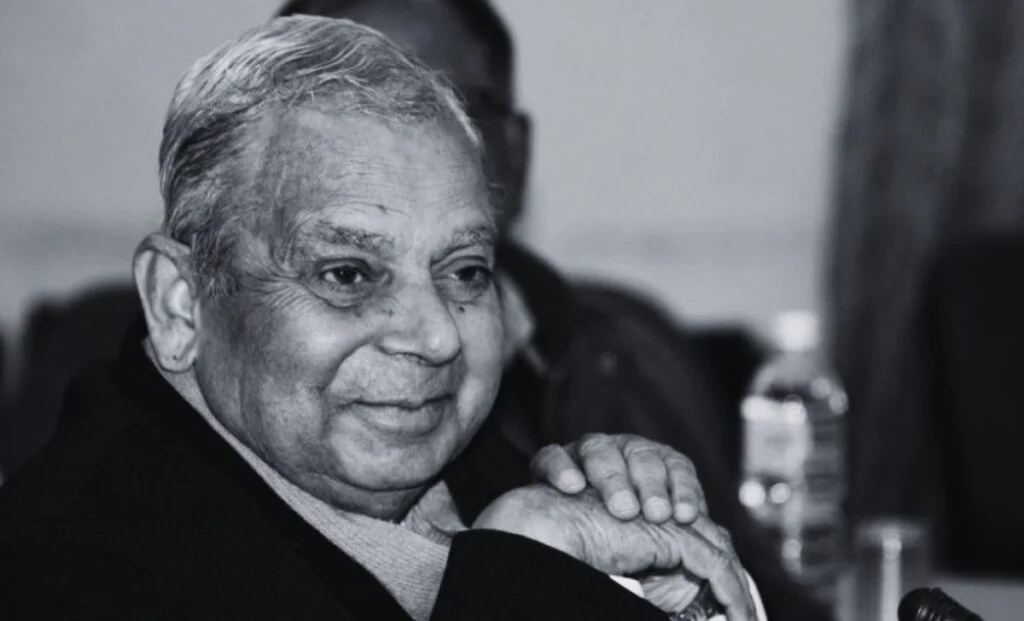
For decades, political gatherings across Nepal’s Madhesh region often revolved around one familiar figure: Mahantha Thakur. Whether addressing supporters in district headquarters, attending constitutional discussions, or leading campaigns for federalism and inclusion, Thakur became synonymous with the rise of Madhesh-centric politics.
Today, however, Nepal’s political landscape has changed significantly. While Thakur remains one of the country’s most experienced political leaders, his role has evolved from frontline party chief to elder statesman. The question now is not whether he remains respected, but whether he can still influence the future direction of Madhesh politics.
Thakur’s political journey spans several decades, including service as a cabinet minister, diplomat, parliamentarian and one of the principal leaders of the Madhesh movement. His leadership helped shape debates surrounding federalism, constitutional reform and representation for communities in Nepal’s southern plains.
During the height of the Madhesh movement, political gatherings led by Thakur frequently attracted thousands of supporters. These meetings were more than campaign events—they became platforms where constitutional demands, regional grievances and questions of representation were debated publicly.
In recent years, the influence of Madhesh-based parties has declined as repeated party splits, changing alliances and the emergence of new political forces fragmented their traditional support base. Leaders who once stood together found themselves heading competing parties, weakening the movement’s collective political strength.
Recognising this challenge, the Loktantrik Samajbadi Party (LSP) and Janata Samajbadi Party (JSP) Nepal reunited, with Upendra Yadav assuming the position of party chair while Mahantha Thakur accepted the role of patron. The reunification was widely viewed as an effort to consolidate Madhesh politics after years of internal division.
Although Thakur no longer manages the party’s day-to-day affairs, he continues to appear at important political gatherings, consultations and public events involving Madhesh leaders. His speeches increasingly focus on constitutional implementation, federalism and the need to preserve the original objectives of the Madhesh movement rather than electoral campaigning alone.
His continued presence was reinforced when he entered Nepal’s National Assembly, ensuring that his voice remains part of parliamentary discussions despite stepping away from executive party leadership.
Observers note that Thakur’s influence today is measured less by organisational control and more by his ability to bring leaders together. At several recent political gatherings, he has called for unity among Madhesh-based parties, arguing that fragmentation has reduced their bargaining power in national politics.
Political analysts say this represents a transition common among veteran leaders. Instead of leading election campaigns directly, they often become consensus-builders whose experience carries weight during negotiations, coalition discussions and constitutional debates.
Yet significant challenges remain. The political environment that once enabled large regional mobilisation has changed. Younger voters increasingly evaluate leaders based on governance, employment, economic opportunities and service delivery rather than identity politics alone. National parties have also expanded their influence in Madhesh, making electoral competition far more complex than it was a decade ago.
Even so, Thakur’s legacy within Nepal’s democratic history remains substantial. His role during the Madhesh movement helped shape national conversations on inclusion, proportional representation and federal restructuring. Those contributions continue to define his place in Nepal’s political history regardless of future electoral outcomes.
Whether Mahantha Thakur will once again become a central figure in major political decision-making remains uncertain. What is clear is that his participation in political gatherings still attracts attention, particularly among leaders seeking consensus on the future of Madhesh politics.
As Nepal prepares for another phase of political realignment, Thakur appears to be embracing a different role—not necessarily as the leader at the front of every campaign, but as a veteran politician whose experience continues to influence discussions long after the rallies have ended.
In contemporary Nepali politics, where alliances change quickly and parties frequently reorganise, that may prove to be a different kind of influence quieter than before, yet still significant.
Replies
No replies yet. Log in to be the first to reply!