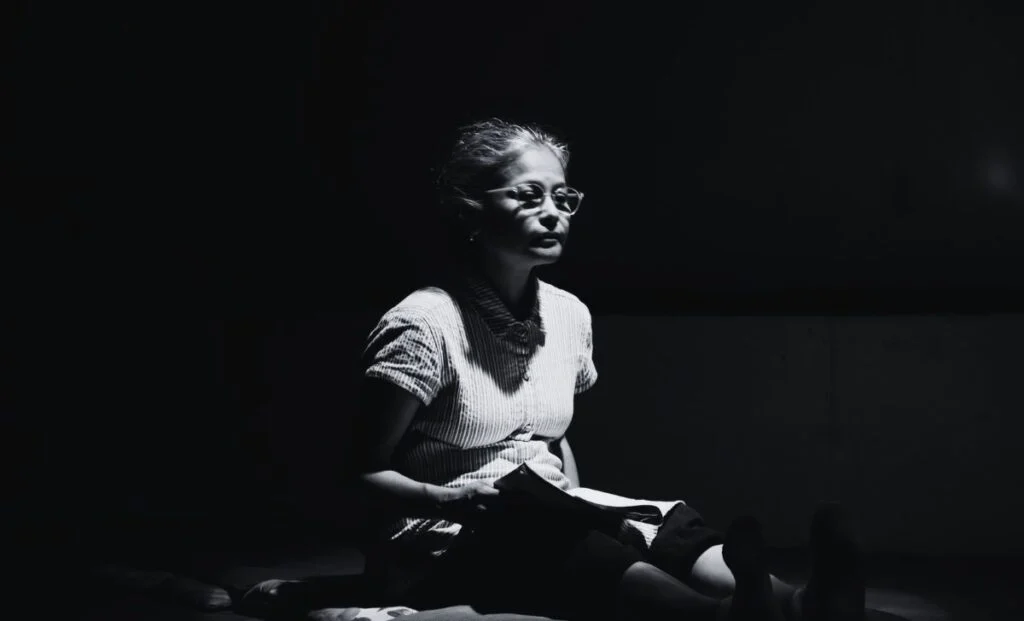
Kathmandu has witnessed many memorable theatre productions over the past two decades, but only a handful have managed to leave audiences debating social issues long after the curtains closed. Among those productions is Sabiti—a play remembered not only for its storytelling but also for its willingness to confront uncomfortable realities of Nepali society.
More than a decade after its first stage production, the questions raised by Sabiti remain strikingly relevant. As Nepal’s theatre scene experiences renewed interest from younger audiences and independent artists continue to experiment with bold narratives, one question emerges: could a production like Sabiti once again become a defining cultural event in Kathmandu?
Originally adapted from the novel by the late Jagadish Ghimire, Sabiti tells the story of a woman navigating a society shaped by patriarchy, social hierarchy, and unequal power structures. Rather than offering easy answers, the play presents deeply personal struggles that mirror broader questions about justice, dignity, and the role of individuals within an unequal society.
When Theatre Village first brought Sabiti to the stage in 2013, it was widely regarded as an ambitious adaptation of one of Nepal’s important literary works. Years later, the play returned under director Bimal Subedi, introducing the story to a new generation of audiences while reaffirming that many of the issues explored in the original narrative had not disappeared.
The revival demonstrated an important reality about theatre: a powerful story does not lose its significance simply because time has passed. If anything, audiences often interpret the same work differently as society changes around them.
Kathmandu’s theatre landscape today is considerably different from what it was a decade ago. Independent theatres have expanded their reach, young actors have entered the profession in greater numbers, and social media now allows performances to spark conversations far beyond the walls of an auditorium. A production that resonates with audiences no longer ends when the final applause fades; discussions continue online, through reviews, interviews, and public debate.
That changing environment could provide fertile ground for a contemporary revival of Sabiti or another production carrying a similarly powerful social message.
Today’s audiences are increasingly drawn to stories that reflect the complexities of modern Nepal. Issues surrounding gender equality, caste discrimination, economic disparity, migration, institutional trust, and social justice continue to shape national conversations. Theatre has the unique ability to present these topics not as statistics or headlines but through human experiences that audiences can emotionally connect with.
Unlike films or television, live theatre creates an immediate relationship between performers and viewers. Every performance becomes a shared experience in which silence, emotion, and audience reactions contribute to the storytelling itself. That intimacy often gives socially driven productions a lasting impact.
Recent years have also shown growing public interest in theatre productions that tackle contemporary issues. Audiences have demonstrated a willingness to engage with challenging narratives rather than seeking entertainment alone. While commercial viability remains a challenge for many theatre groups, critically acclaimed productions continue to prove that there is demand for meaningful stories.
A modern production inspired by the spirit of Sabiti would likely face a different audience from the one that first encountered the play. Younger viewers bring different perspectives shaped by social media, changing political realities, and evolving discussions around equality and identity. Those differences could produce fresh interpretations of the story without altering its central message.
Whether such a production would become a cultural phenomenon is impossible to predict. Success depends on factors including direction, performances, production quality, public interest, and the broader cultural moment in which it appears. Theatre history shows that influential productions are often the result of timing as much as artistic excellence.
What remains clear, however, is that the themes explored by Sabiti have not faded from public relevance. Questions about power, justice, and human dignity continue to resonate in Nepal today, making the play’s underlying message as significant as when it first reached the stage.
Perhaps that is why Sabiti continues to be remembered. It was never merely a theatrical production. It became part of a larger conversation about Nepali society and the role of art in challenging audiences to reflect on the world around them.
If another production of similar ambition were to take the stage in Kathmandu, it could once again remind audiences that theatre is more than performance. At its best, it becomes a space where difficult conversations begin, where literature finds new life, and where society sees a reflection of itself under the lights of the stage.
Replies
No replies yet. Log in to be the first to reply!